The Complete Guide to Camping the Big Island of Hawaii by Camper Van
Plan your Big Island camping trip with a 4WD rooftop camper van. Campgrounds, routes, and everything you need to explore Hawaii’s most dramatic island.

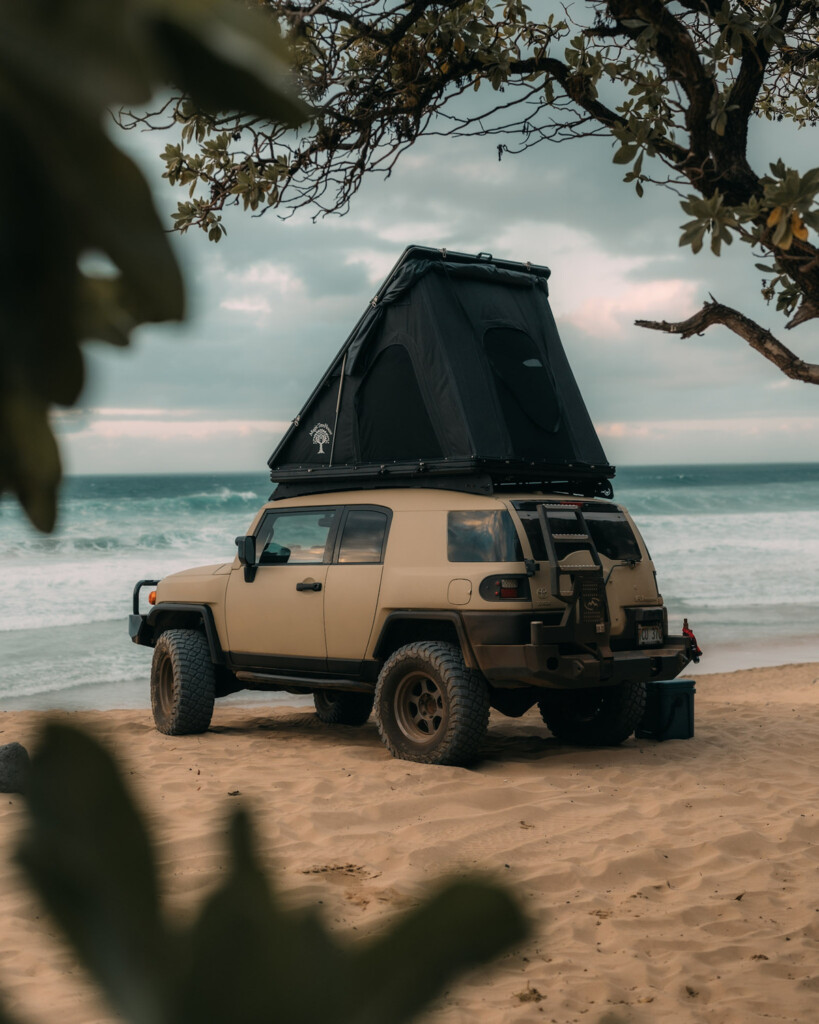
Picture waking beachside on Kauai’s north shore, coffee brewing while waves break nearby. Or imagine falling asleep under Milky Way skies after watching lava glow on the Big Island. This is what a hawaii camper road trip delivers in 2026—freedom travelers can’t find locked into resort schedules.
Traditional rv rental options struggle in Hawaii. Most campgrounds across the hawaiian islands aren’t full-hookup RV parks with overnight parking for large motorhomes. They’re tent-style sites with size limits that exclude bulky vehicles. Rooftop tent campers fit these spaces perfectly while offering the convenience of sleeping in your vehicle.
Key advantages of camper travel:
Hawaiian Overlanders’ rigs handle roads like Saddle Road or Kauai’s backroads with 4WD, high ground clearance, and 33-inch wheels. It’s adventure with structure—spontaneous days, but safe and permitted places to sleep each night.
Hawaiian Overlanders serves two islands: Kauai with pickup near Līhuʻe Airport (LIH), and the Big Island near Kona (KOA) or Hilo (ITO) depending on fleet availability.
Kauai camper travel immerses you in lush landscapes—the dramatic north shore near Hanalei, Waimea Canyon (the “Grand Canyon of the Pacific”), and beaches with designated camping along the coast. Realistic daily drives stay under 100 miles on winding roads.
Big Island camper travel spans volcanic landscapes from active volcanoes to black sand beaches. Drive diverse climates from sunny Kona to rainier Hilo, with campgrounds near hawai’i volcanoes national park offering front-row access to one of the world’s most active volcanic zones featuring mauna loa.
Inter-island ferrying isn’t allowed. Guests choose one island per trip and return the camper to the same location. Each island has its own custom guidebook with vetted campgrounds and suggested driving loops.
The booking process is straightforward: browse available dates online, complete your reservation, then connect with the team for pre-trip planning. Pickup happens at airport-adjacent locations where staff walk you through everything.
Booking basics:
At pickup, you’ll receive a complete orientation covering rooftop tent setup, camp kitchen operation, and your printed guidebook. Drivers need a valid license (standard passenger car license—no CDL), and must meet minimum age requirements (typically 25 years).
Support runs 7 days a week with on-island contacts for campground changes, weather updates, or park closures. Safety and honesty are core values—you’ll receive transparent communication throughout your trip.
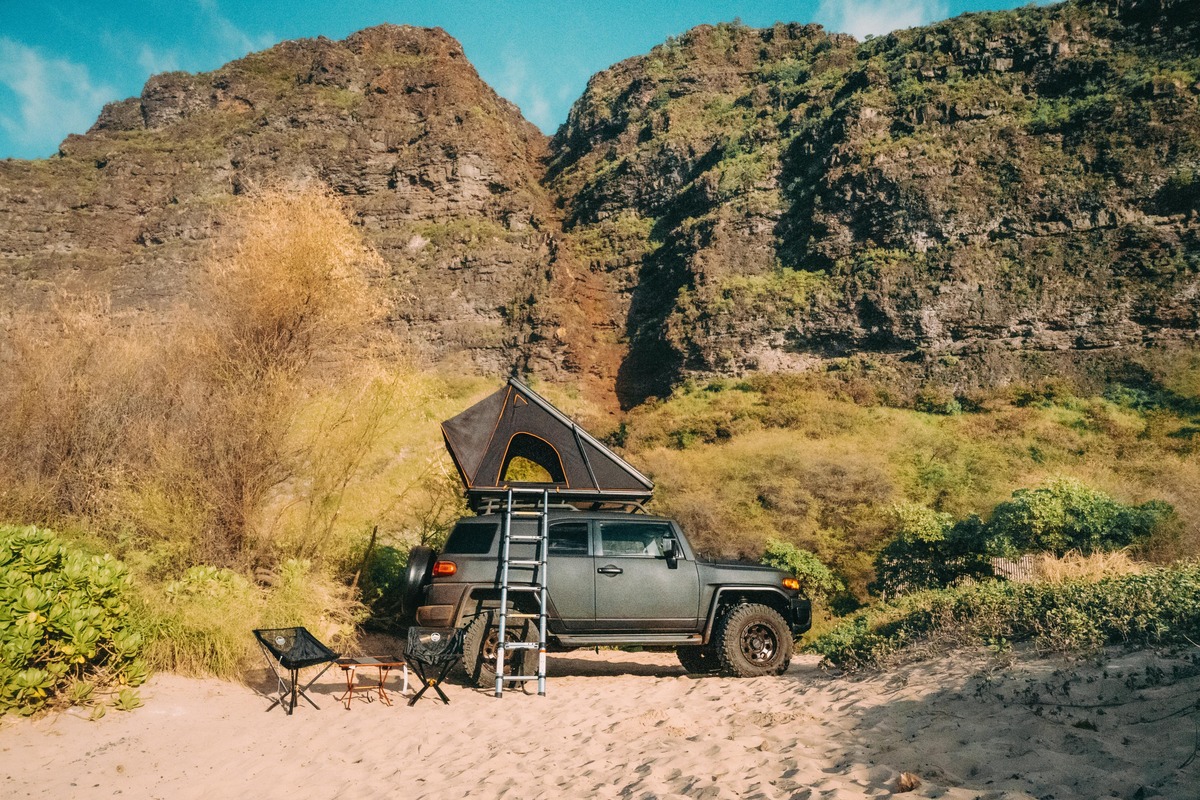
All vehicles are built around rooftop tents on well-maintained 4×4 or AWD trucks and SUVs. These aren’t designed for off-grid trespassing—they’re optimized for legal campground-based vehicle use across designated sites.
| Vehicle | Capacity | Features |
| Lifted FJ Cruiser (Kauai) | Sleeps 2-4 | Full camp kitchen, $189/day |
| Grey FJ Cruiser (Big Island) | Sleeps 2-4 | 4WD, rooftop tent |
| Lexus GX470 Camper | Sleeps 2-4 | Matte silver, 2-in-1 experience |
Rooftop tents set up in 5-10 minutes. Sleeping elevated keeps you dry, away from critters, and catches breezes in humid conditions. All rigs receive regular mechanical inspections, tire checks, and cleaning between rentals.
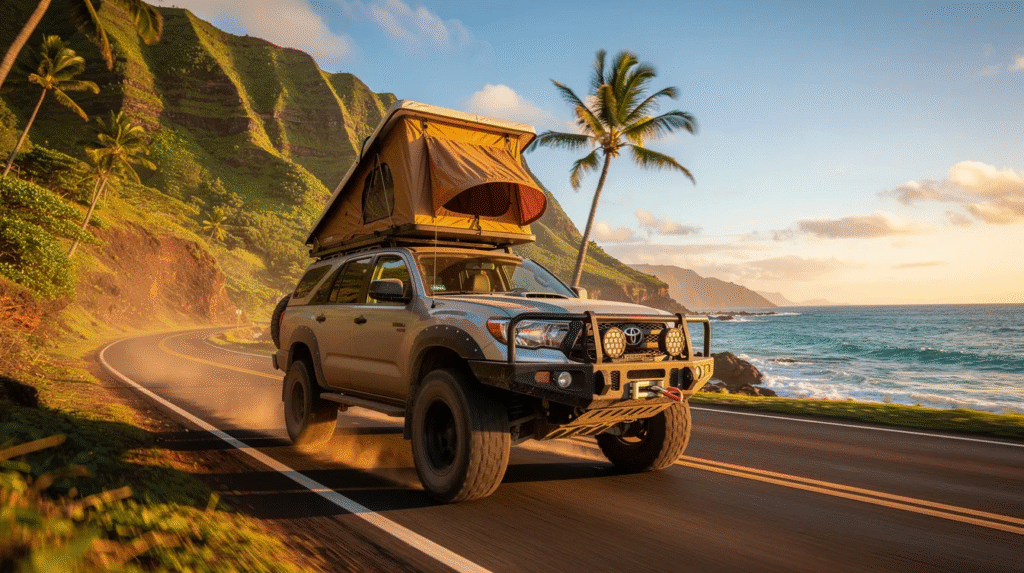
The concept is turnkey adventure. Arrive with your clothes and a sense of adventure—the rest is ready.
Standard inclusions:
Navigation and planning extras:
Safety items: First-aid kit, flashlight, jumper cables, jack and spare tire, and emergency contacts for park rangers and weather hotlines.
What to bring yourself: Personal clothing for sun and rain, reef-safe sunscreen, soft duffel bags (not hard suitcases), and any medications. Compact luggage works best for the camper setup.
Turn your camper into a complete adventure basecamp without shopping at multiple rental shops across the island.
Available add-ons (approximately $15-25/day):
All water gear is selected for beginner ease. The guidebook directs you to beginner-friendly beaches and marine life viewing spots where rentals are permitted. Reserve add-ons in advance—they’ll be pre-loaded before your arrival, reducing airport-to-adventure time.
Hawaii has strict local regulations about camping. Wild camping, roadside sleeping, and beach pullout sleeping are prohibited everywhere—violations carry fines.
Legal camping options include:
Permit systems typically open reservations 30-60 days ahead. Weekends and holidays in november, December, and January book quickly. Hawaiian Overlanders provides up-to-date guidance about where to park, respecting quiet hours, and Leave No Trace principles so visitors feel confident and welcomed.
These itineraries are starting points—customize with help from the guidebooks.
5-Night Kauai Loop:
7-Night Big Island Loop:
Rooftop camping lets you wake at sunrise viewpoints or snorkeling beaches without long pre-dawn drives. Visit during December through april for whale watching; clear night camping offers incredible stargazing.
Hawaii welcomes camper travelers year-round, but conditions vary.
| Season | Kauai Conditions | Big Island Conditions |
| April–October | Drier overall | Sunny Kona, moderate Hilo |
| November–March | North shore wetter | Rainier Hilo side |
Winter holidays and mid-summer represent peak demand—book campers and campgrounds months in advance. Shoulder seasons (april–May, september–october) offer quieter sites and more flexible planning.
Hawaiian Overlanders monitors weather, volcanic activity, and high surf advisories, communicating honestly about any closures affecting your route.
A camper trip often costs less than mid-range hotels while delivering immersive experiences you can’t purchase at any resort.
Typical cost components:
For 2-4 travelers sharing costs, total per-person spend drops significantly compared to booking separate honolulu or waikiki beach hotel rooms. Factor in non-monetary value: sunrise views from your rooftop tent, freedom to head wherever you choose, and rest in spots without hotel infrastructure.
First-time campers and first-time Hawaii visitors are welcome. The guidebooks and support make the learning curve manageable.
Packing guidance:
Health and safety: Reef-safe sunscreen, insect repellent, reusable water bottle. Sun intensity remains strong even in winter—don’t skip protection.
Driving tips: Speed limits run 25-55mph. Plan shorter driving days than on the mainland. Avoid night driving on unfamiliar rural roads. Download offline maps for patchy reception areas.
Respect cultural sites—stay off private land without permission, observe kapu (forbidden) signs, and be mindful around sacred heiau (temples). This isn’t just about rules; it’s about being welcomed as a thoughtful visitor exploring paradise.
Trade hotel hallways for palm trees. Swap alarm clocks for ocean sunrises from your rooftop tent.
Hawaiian Overlanders delivers what travelers seek: local knowledge baked into guidebooks, legally focused camping advice, fully equipped vehicles, and responsive support. The complete experience is ready—you just need to show up.
Ready to explore?
Unsure about routes or campgrounds? Reach out with your dates and island choice for personalized suggestions before booking. Your Hawaii camper adventure starts with a single step.
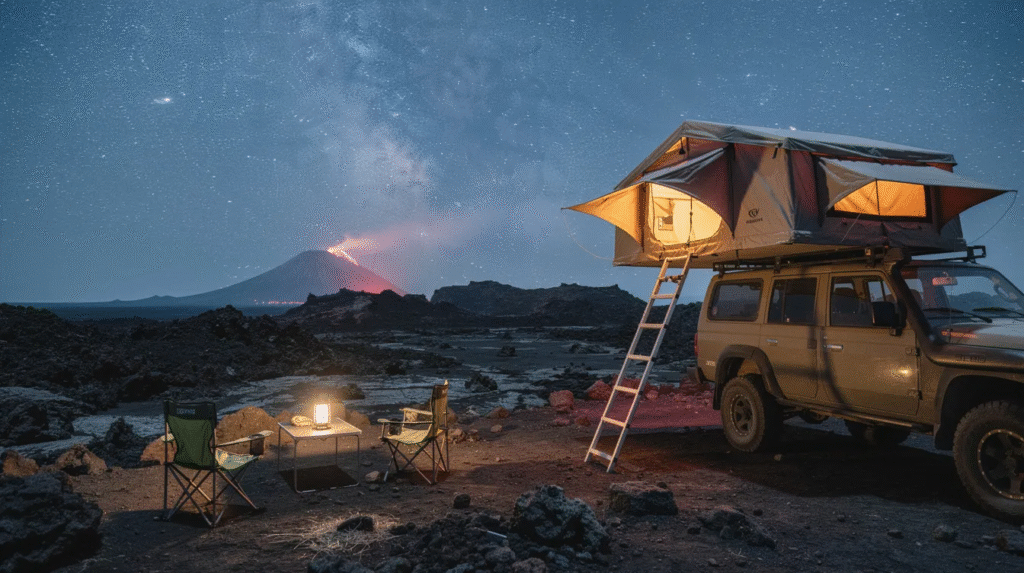
No. Overnight sleeping in vehicles is restricted to designated campgrounds and permitted areas on Kauai and the Big Island. Hawaiian Overlanders provides an updated list of approved campgrounds and clear guidance on where guests may spend the night, reducing risk of fines. Never rely on informal online tips about “secret” roadside spots—follow the official guidance in your provided guidebook.
No prior experience required. Many customers are first-time campers. Staff provide in-person walkthroughs covering tent setup, ladder use, and camp kitchen operation at pickup. Printed and digital instructions stay with you throughout the trip, and support is available if questions arise.
Families are welcome, but consider children’s ages and comfort with ladders before booking. Parents with very young kids should discuss configurations with Hawaiian Overlanders in advance. Supervise children around ladders and establish clear rules about climbing in and out of the tent.
Quality rooftop tents feature waterproof flys, sealed seams, and ventilated windows designed for typical island showers. During severe weather, contact Hawaiian Overlanders for route adjustments or recommendations for sheltered inland sites. Check local forecasts daily, especially november through March.
Many high-elevation and rough 4×4 roads—including Mauna Kea summit access—may be off-limits for safety and insurance reasons. Your rental agreement specifies permitted roads. The guidebook suggests scenic, legal drives and viewpoints offering incredible stars and landscapes without requiring prohibited routes in this class of adventure travel.
Plan your Big Island camping trip with a 4WD rooftop camper van. Campgrounds, routes, and everything you need to explore Hawaii’s most dramatic island.
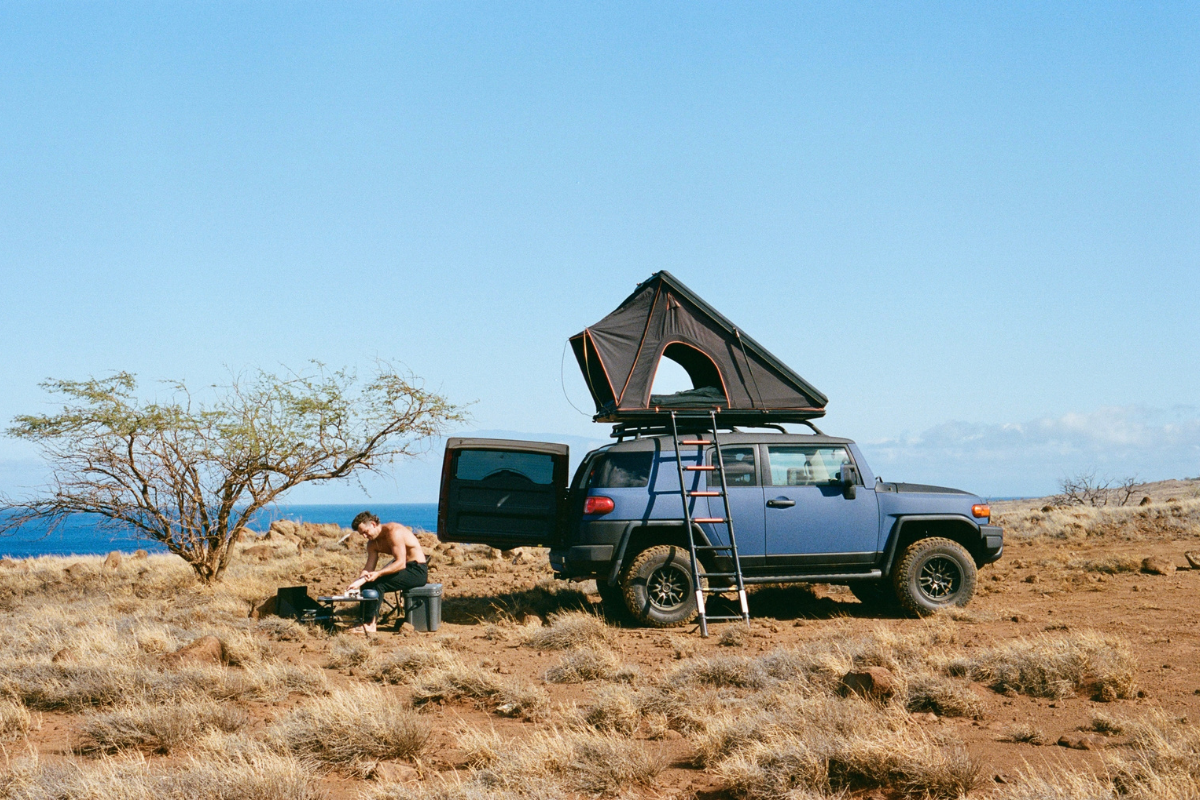
Key Takeaways Introduction: Why Think Beyond a Standard Kauai Van Rental? Kauai is compact—roughly 33 miles long and 25 miles wide—yet packed with destinations that
Key Takeaways Introduction: Why Choose a Big Island Camper Rental Instead of a Hotel? Imagine waking up above the black sand at Punaluʻu, unzipping your